
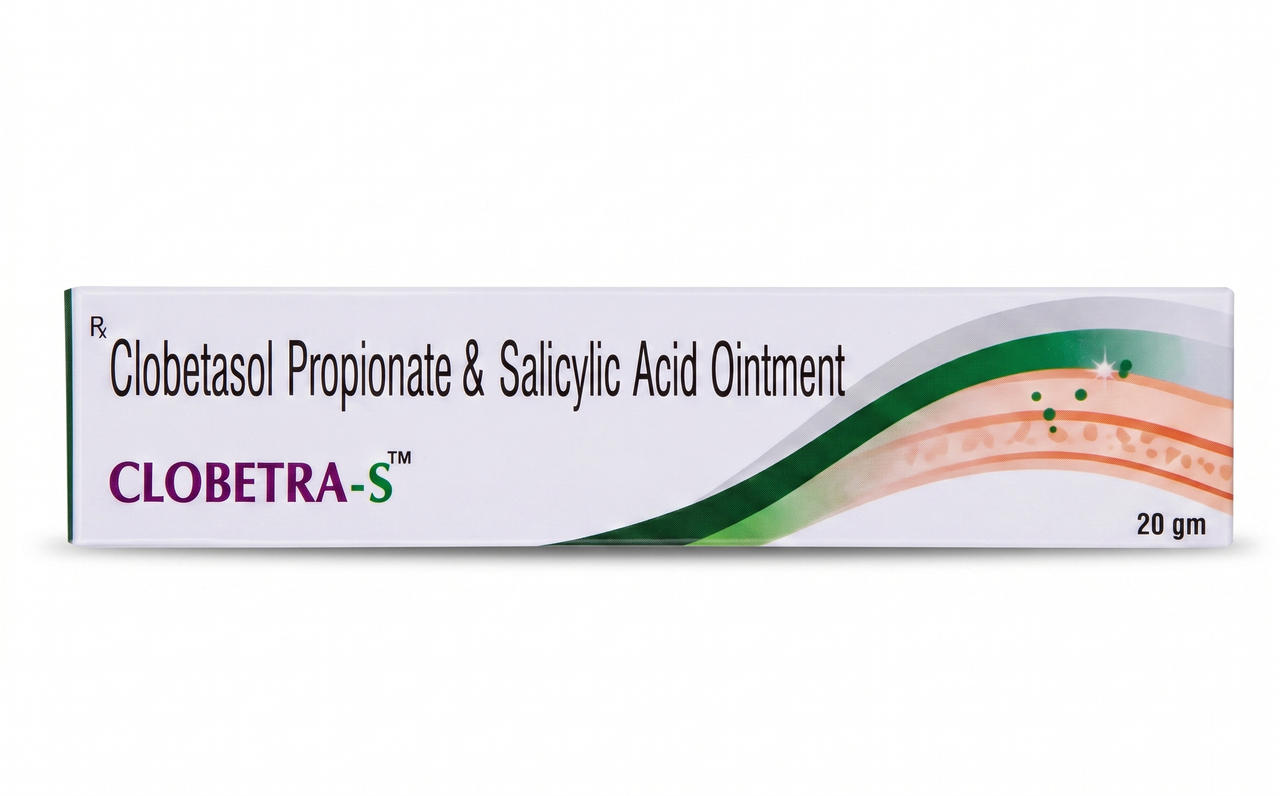
Introduction
Clobetasol Propionate & Salicylic Acid Ointment is a combination topical formulation that brings together the potent anti-inflammatory action of Clobetasol Propionate (a super-high potency corticosteroid) with the keratolytic and desquamating properties of Salicylic Acid. This dual-action ointment is specifically designed for the management of hyperkeratotic and inflammatory skin conditions such as psoriasis, lichen planus, and chronic eczema.
Composition
Each gram of ointment contains:
- Clobetasol Propionate IP 0.05% w/w (0.5 mg/g): A super-high potency topical corticosteroid with strong anti-inflammatory, antipruritic, and vasoconstrictive properties.
- Salicylic Acid IP 6.0% w/w (60 mg/g): A keratolytic agent that promotes desquamation of the stratum corneum, enhancing penetration of the corticosteroid and reducing scaling.
Benefits of Clobetasol Propionate & Salicylic Acid Ointment
- Dual Action: Combines potent anti-inflammatory effect with keratolytic action for enhanced efficacy.
- Enhanced Penetration: Salicylic acid removes scales and enhances corticosteroid penetration into thickened skin.
- Rapid Symptom Relief: Provides quick relief from itching, redness, and inflammation.
- Effective for Hyperkeratotic Lesions: Particularly useful for scaly, thickened plaques.
- Convenient 20 gm Pack: Practical size for localized treatment courses.
How Clobetasol Propionate & Salicylic Acid Ointment Works
Clobetasol Propionate acts by binding to intracellular glucocorticoid receptors, modulating gene expression to suppress inflammatory mediators (prostaglandins, leukotrienes, cytokines), reduce immune cell infiltration, and constrict dermal blood vessels.
Salicylic Acid exerts a keratolytic effect by solubilizing the intercellular cement of the stratum corneum, promoting desquamation, softening hyperkeratotic tissue, and increasing hydration. This action facilitates deeper penetration of clobetasol propionate into the affected skin layers.
The combination provides synergistic benefit: salicylic acid removes the physical barrier of scale, allowing clobetasol propionate to reach the inflamed epidermis more effectively.
Indications
- Psoriasis vulgaris (plaque psoriasis)
- Lichen planus
- Chronic eczema (including neurodermatitis)
- Discoid lupus erythematosus
- Other hyperkeratotic, inflammatory dermatoses responsive to topical corticosteroids
Recommended Usage
- Application: Apply a thin layer to the affected area(s) once or twice daily, or as directed by the physician.
- Duration: Use for the shortest duration necessary to achieve clinical improvement. Prolonged use beyond 2–4 weeks should be under strict medical supervision.
- Instructions:
- Clean and dry the affected area before application.
- Gently massage the ointment until absorbed.
- Avoid occlusive dressings unless directed by a physician.
- Wash hands after application unless hands are the treatment area.
Precautions
- For External Use Only: Avoid contact with eyes, mucous membranes, and open wounds.
- Not for Facial/Groin/Axillary Use: Due to high potency and risk of skin atrophy, striae, and telangiectasia in thin-skinned areas.
- Pediatric Use: Use with extreme caution in children; greater systemic absorption risk due to larger surface area-to-body weight ratio.
- Pregnancy & Lactation: Use only if clearly needed and under medical supervision. Weigh potential benefits against risks.
- Systemic Absorption: Prolonged use over large surface areas, especially with occlusion, may lead to systemic corticosteroid effects (HPA axis suppression, Cushing’s syndrome, hyperglycemia).
- Skin Atrophy: Monitor for signs of skin thinning, striae, telangiectasia, and hypopigmentation with prolonged use.
- Secondary Infection: If signs of bacterial, fungal, or viral infection develop, discontinue use and initiate appropriate antimicrobial therapy.
- Salicylic Acid Sensitivity: Discontinue if excessive irritation, burning, or allergic reaction occurs.
- Avoid Abrupt Discontinuation: After prolonged use, taper gradually to prevent rebound flare.
Side Effects
Common (Local):
- Burning, stinging, or irritation at application site
- Dryness, peeling, or erythema
- Folliculitis
Less Common:
- Skin atrophy, striae, telangiectasia
- Hypopigmentation
- Acneiform eruptions
- Hypertrichosis
- Perioral dermatitis
- Allergic contact dermatitis
Always consult your dermatologist or healthcare provider before starting treatment.